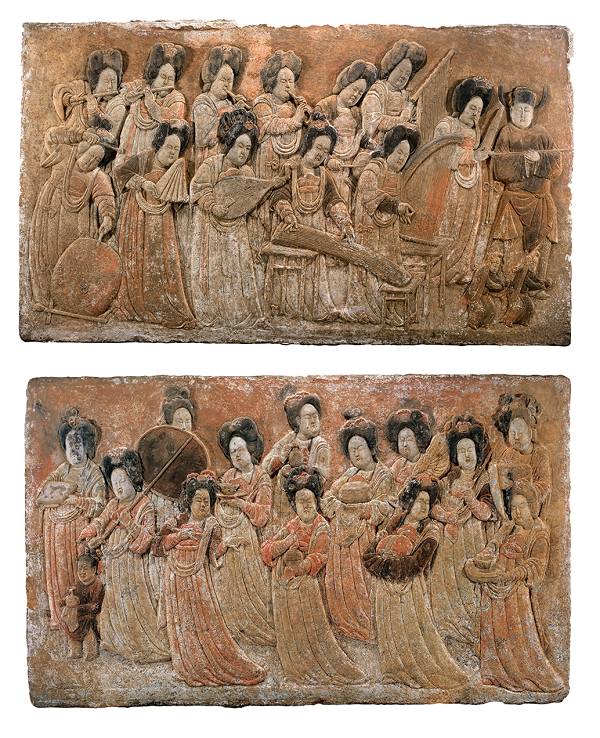
Five Dynasties and Ten Kingdoms
Introduction
The Five Dynasties and Ten Kingdoms period (907-960) was a time of political upheaval and fragmentation in China, occurring between the fall of the Tang Dynasty (618-907) and the rise of the Song Dynasty (960-1279). It was marked by the rapid succession of five short-lived dynasties in the north and the simultaneous existence of ten relatively stable kingdoms in the south. This era is known for its significant cultural developments and military conflicts as various regions vied for power and control. The period highlights a complex tapestry of alliances, warfare, and artistic achievements, setting the stage for the eventual reunification under the Song Dynasty.
Historical Background
The Five Dynasties and Ten Kingdoms period began after the collapse of the Tang Dynasty in 907, a time characterized by political instability and rebellion. The central authority weakened, leading to the rise of regional warlords who established their own factions and claimed independence from central control. The Five Dynasties—Later Liang, Later Tang, Later Jin, Later Han, and Later Zhou—successively ruled the north, each dynasty marked by internal strife and external threats that contributed to their short reigns.
Concurrently, in southern China, ten kingdoms emerged, each maintaining varying degrees of autonomy and stability. These kingdoms included Wu, Southern Tang, Wuyue, Min, Han, Chu, Southern Han, Jingnan, Former Shu, and Later Shu. While these kingdoms engaged in frequent conflicts, they also experienced cultural and economic growth, facilitated by relative political stability compared to the north. The period ended when the Song Dynasty, under Emperor Taizu, gradually unified China, absorbing the independent territories through diplomacy and military conquest.
Political Structure
Five Dynasties
The Five Dynasties consisted of a succession of regimes that controlled the north. The Later Liang, founded by Zhu Wen, marked the beginning of this era, followed by the Later Tang, which established ties with the Shatuo Turks. The Later Jin was notable for its concession of the Sixteen Prefectures to the Khitan Liao Dynasty, a controversial decision that weakened its hold over northern China. The Later Han, established by Liu Zhiyuan, briefly ruled before giving way to the Later Zhou, which was the strongest and most successful of the five, setting foundations for the Song unification.
Ten Kingdoms
The Ten Kingdoms in the south were characterized by diverse political structures and varying degrees of centralization. Wu, located in the lower Yangtze region, was one of the first to declare independence, followed by its successor, the Southern Tang, which became a significant cultural and economic center. Wuyue, in present-day Zhejiang and Jiangsu, was known for its prosperity and patronage of art and Buddhism. The kingdom of Min, located in Fujian, and the Southern Han, in the southern coastal areas, further exemplify the regional autonomy and cultural diversity of this period. Despite their political independence, these kingdoms were ultimately brought under the control of the Song Dynasty through strategic alliances and conquests.
Economy
During the Five Dynasties and Ten Kingdoms period, the economy was marked by regionalism and diversity. The northern dynasties, while struggling with political instability, managed to control key trade routes and cities, which allowed for some economic activity. However, it was the southern kingdoms that experienced significant economic growth due to their access to maritime trade routes and fertile lands. This period saw the development of a more complex economic structure, with increased urbanization and the rise of market towns.
Agriculture remained the backbone of the economy, with rice cultivation becoming increasingly important, especially in the south. The kingdoms of Wuyue and Southern Tang were particularly known for their advancements in irrigation and agricultural techniques, which boosted productivity. Trade flourished, both domestically and internationally, with silk, tea, and ceramics being significant export goods. The economic prosperity of the southern kingdoms contributed to their ability to support a flourishing culture and arts scene, setting a foundation for the economic policies of the following Song Dynasty.
Culture and Society
The Five Dynasties and Ten Kingdoms period was a time of cultural flourishing, particularly in the south, where relative political stability allowed for artistic and intellectual pursuits. This era saw the development of unique cultural identities within each of the kingdoms, influenced by local customs, resources, and interactions with foreign cultures through trade.
Literature and poetry thrived, with the continuation and refinement of Tang literary traditions. Calligraphy and painting were also highly esteemed art forms, with artists exploring new techniques and themes. The kingdom of Wuyue, for instance, became a major center for Buddhist art and literature, producing important works that influenced later generations.
Socially, the period was characterized by a rigid hierarchical structure, with power concentrated in the hands of the ruling elite and military leaders. However, the economic prosperity in some regions led to the rise of a wealthy merchant class, which began to exert influence over cultural and social developments. Despite the political fragmentation, this period laid important cultural and social foundations that would be absorbed and expanded upon by the Song Dynasty.
Military Affairs
Military affairs during the Five Dynasties and Ten Kingdoms period were dominated by the constant shifting of power between regional warlords and dynastic rulers. The period was marked by frequent battles, sieges, and the strategic use of alliances to gain territorial control. The northern dynasties relied heavily on cavalry and infantry, often employing foreign mercenaries and building formidable defenses to counter external threats, particularly from the Khitan Liao Dynasty.
In the south, military strategies varied among the kingdoms, with some focusing on naval power to control important rivers and coastlines. The Southern Tang, for instance, developed a strong navy to protect its interests and trade routes. Despite the lack of a unified military strategy across the region, innovations in military technology and tactics were evident, contributing to the evolving art of war in China.
The fragmentation of power during this period created a dynamic military landscape, with regional leaders constantly vying for supremacy. The eventual unification under the Song Dynasty was achieved through a combination of military conquests and strategic diplomacy, as the Song rulers worked to consolidate their power and bring an end to the era of division.








